







Argentine Cheeses
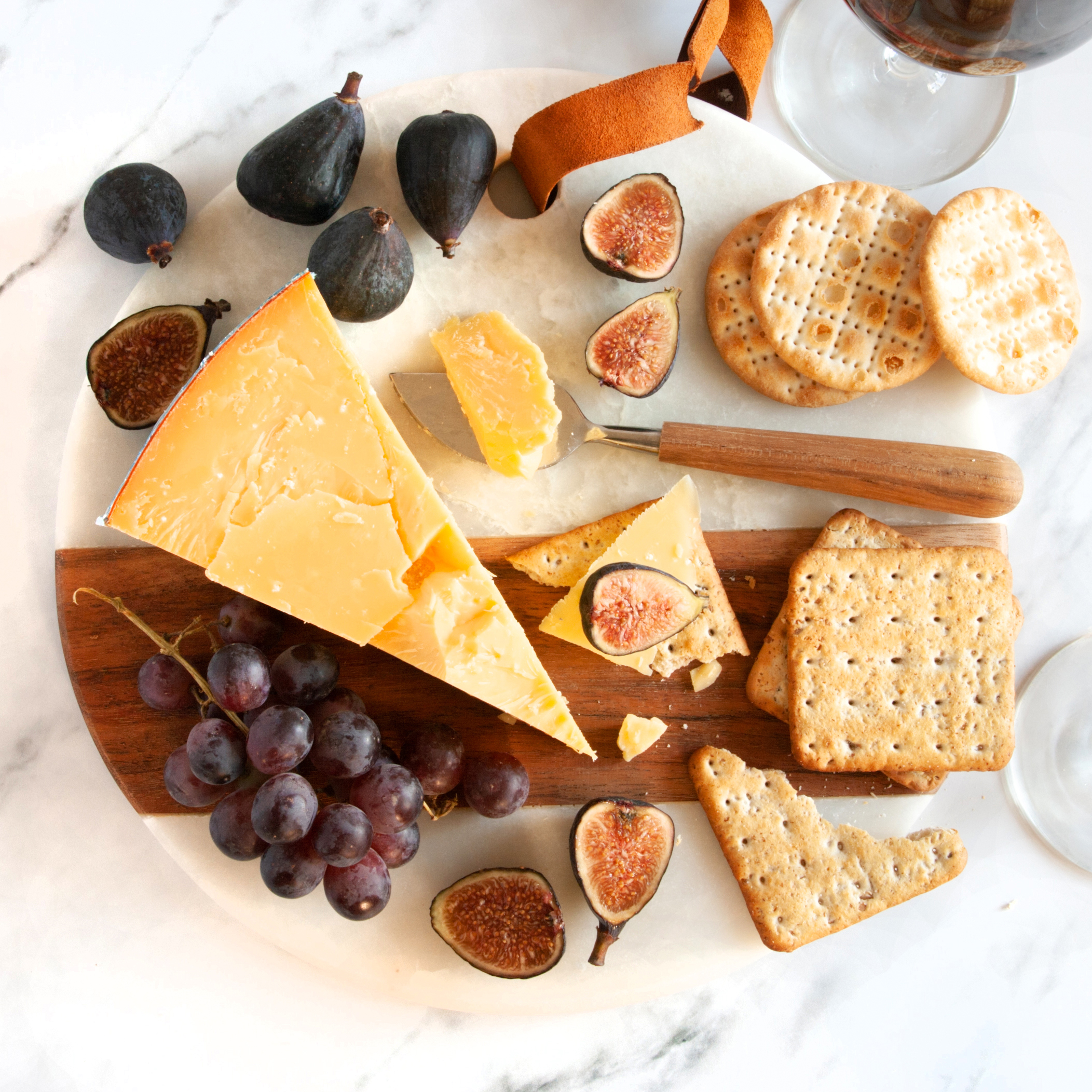
- Edam: Originally an imitation of Dutch Edam balls, Argentine "Magnasco" Edam has taken on an identity of its own. It is dryer and harder than Dutch Edam and good on crackers and with red wine.
- Provoleta: Similar to Italian Provolone.
- Reggianito: Similar to Italian Parmigiano Reggiano. Mostly used for grating. Shop
- Sardo: Another grating cheese, similar to Italian Romano.
Australian & New Zealand Cheeses
- Cheddar: Same characteristics as English Cheddar.
- Roaring Forties Blue: A uniquely creamy blue cheese made exclusively by King Island Dairy.
Belgian & Austrian Cheeses
- Emmental: Same characteristics as Swiss Emmental.
- Gruyere: Same characteristics as Swiss Gruyere.
- Capra: A fresh goat cheese (chevre) available plain or flavored with honey or herbs.
- Chimay: Chimay produces several varieties of cheese, the most famous of which is their Trappiste with Beer. It is springy textured, slightly aromatic and has an enjoyable meaty flavor.
- Moosbacher: Part Emmental-style swiss and part washed-rind stinker, this Austrian classic is the only cheese that has a washed rind and large eyes (holes) in the paste, owing to a dual-ripening process. Named after one of the Styrian farmers who supply the milk for the cheese, this cheese is one for the bold! These generous-sized, pasteurized cows' milk wheels are wrapped in linen made just for this purpose, and the flavor has been described as a cross between Dutch Gouda and Alpine cheeses such as Appenzeller or Gruyere. Semi-firm and smooth, it tastes sweet and fruity with a creamy, melting mouthfeel, a bit of spice and pungency, and notes of toasted hazelnuts. While it makes a fine table cheese, it is also a superb melter. Shop
- Passendale: A sweet semi-soft cheese with many small holes.
- Wynendale: A decidedly spicy, ultra creamy cheese with a pronounced aroma.
Canadian Cheeses
- Cheddar: Same characteristics as English Cheddar.
-
Oka: Made in Quebec since 1893, Oka was first created by Benedictine Monks who emigrated from France. It is semi-soft, slightly aromatic and has a piquant flavor.
Shop All Canadian Cheeses
Eastern European Cheeses
- Podlaski: A flavorful yellow cheese for melting or snacking. Shop
Shop All Eastern European Cheeses
English Cheeses
- Caerphilly: Originally from Wales, most Caerphilly production has moved to England. A simple white cheese with a chalky texture when aged or a creamy texture when young. Shop
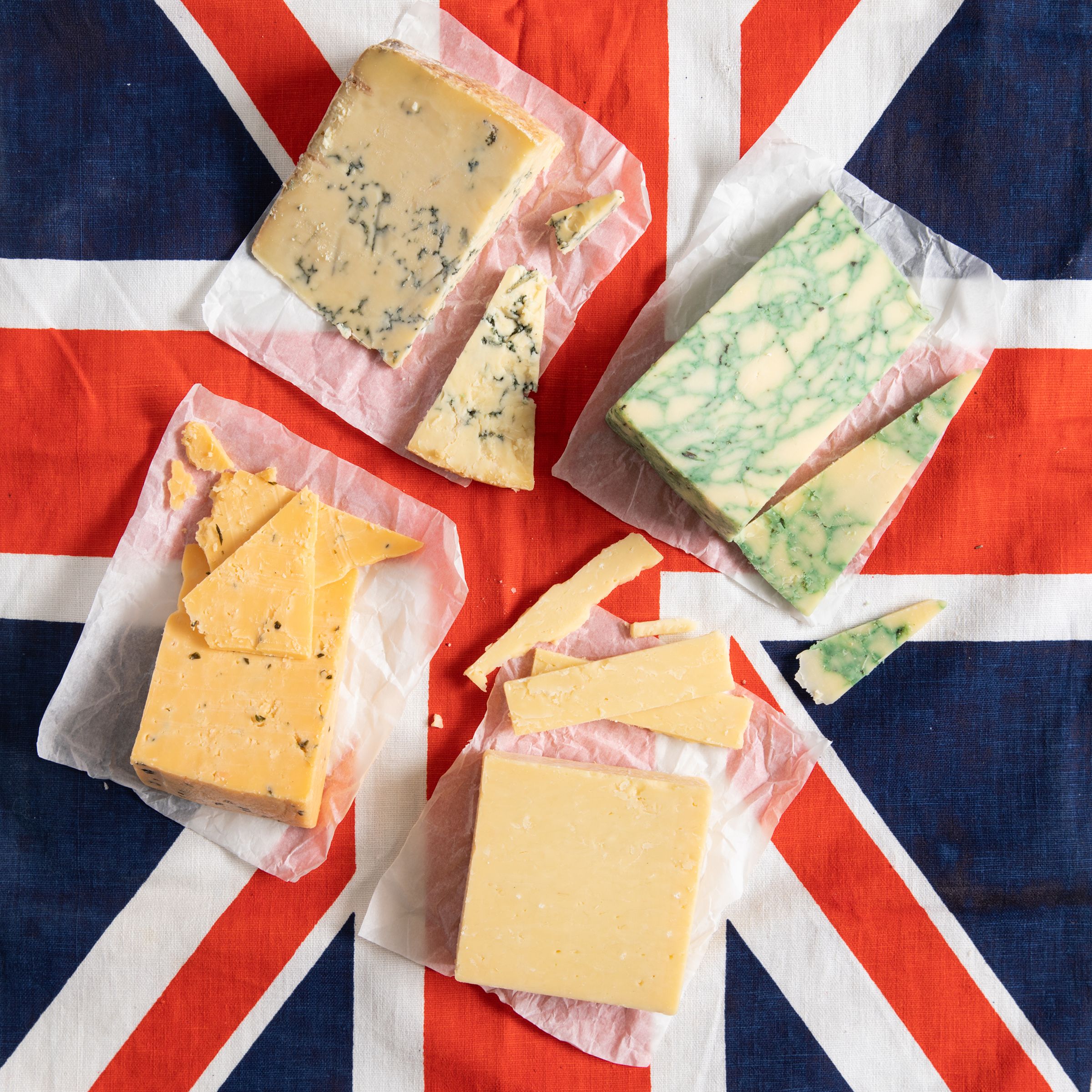
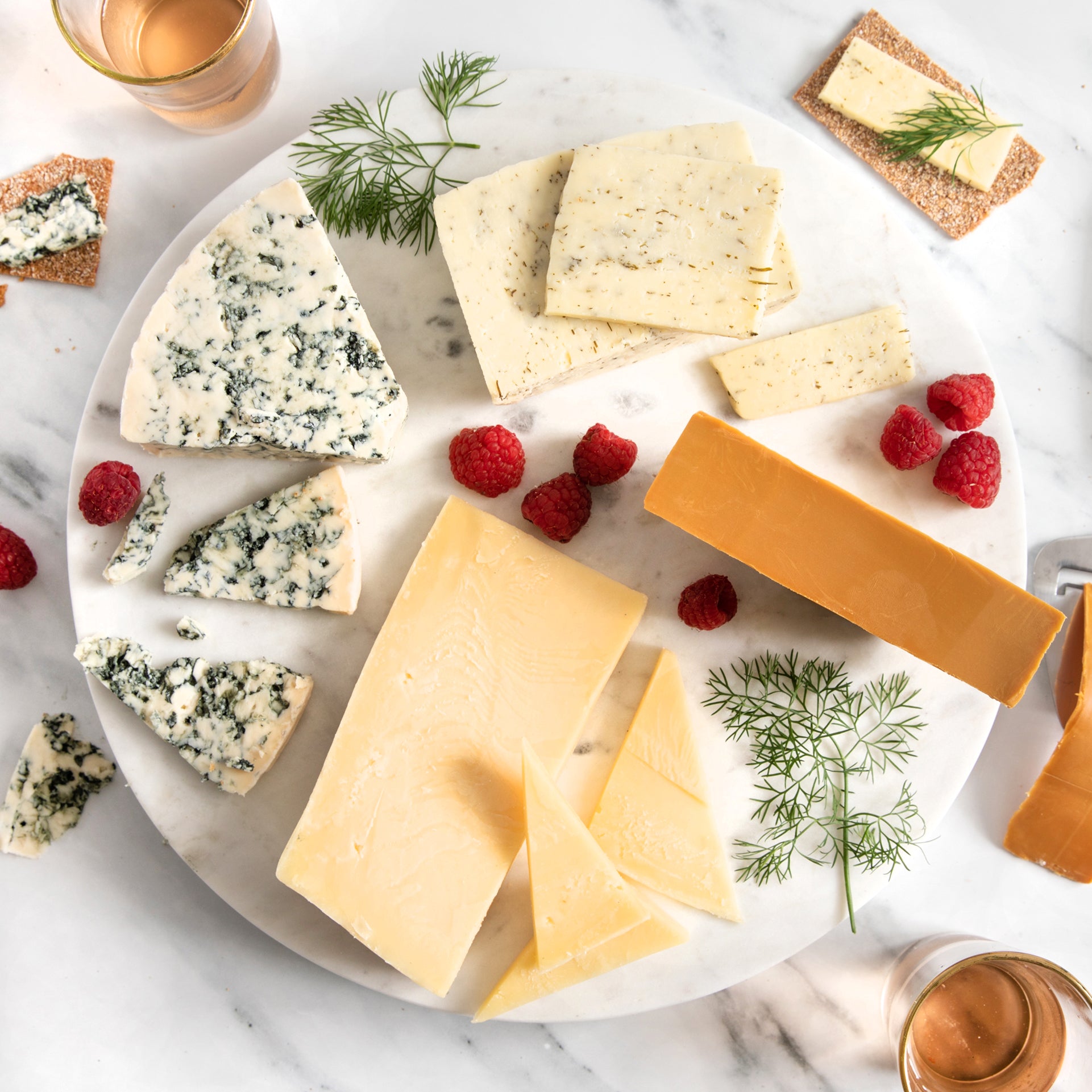
- Cheddar: Cheddar cheeses were originally made in England; however, today they are manufactured in quite a number of countries. Fully cured, Cheddar is a hard, natural cheese. The rind, if any, is artificial, most often times wax. The color of the wax used for coating does not indicate a level of quality. Normally, the color of Cheddar ranges from white to pale yellow. Some Cheddars however have a color added, giving the cheese a yellow-orange color. Cheddar is always made from cow's milk and has a slightly crumbly texture if properly cured. If the cheese is too young, the texture is smooth. Cheddar gets a sharper taste the longer it matures. The important thing in purchasing Cheddar is to consider the age of the cheese. Of course, the older it is, the more it will cost. Shop
- Cheshire: One of the oldest English cheeses, allegedly invented during the 12th century. Cheshire is firm in texture and a bit more crumbly than Cheddar. Cheshire is rich, mellow and slightly salty with an excellent aftertaste, its flavor sharpens as it ages. Shop
- Clotted Cream: Strawberry's famous partner, Clotted Cream has a much wider application than just strawberries and cream. It is thick and rich, and needs to be spooned. This product is served over fruit, hot scones, fish or vegetables. Shop
- Cornish Yarg: Made at Ulceby Grange in Lincolnshire by Simon Jones, this cheese is similar to cheddar but with less acidity and a slightly bitter quality upfront with a genuinely sweet aftertaste.
- Derby: Similar to Lancashire, it is most often sold as Sage Derby, a green cheese flavored with bits of sage.
- Double Gloucester: A natural hard cheese. Double Gloucester has a mild and rich flavor with a smooth texture and a creamy yellow color. This cheese is excellent with fruit and beer. Shop
- Lancashire: A white cheese with a firm chalky texture. It has a mild flavor with hints of egg yolk.
- Leicester: A natural hard cheese. Leicester has a rich, mild flavor with a flaky texture and a deep orange color. This cheese is excellent with fruit and beer. Shop
- Lincolnshire Poacher: Made at the Lynher Dairy in Cornwall, this cheese has a grey rind wrapped in large nettle leaves. Poacher has a grassy, creamy flavor and a firm texture.
- Shropshire Blue: Basically Stilton with orange food coloring. Shop
- Stilton: Historically referred to as "The King Of Cheeses," Stilton is a blue-mold cheese with a rich and mellow flavor and a piquant aftertaste. It has narrow blue-green veins and a wrinkled rind which is not edible. Stilton is milder than Roquefort or Gorgonzola and is equally excellent for crumbling over salads or as a dessert cheese served with a Port Wine. Shop
- Wensleydale: Traditionally blue, because the cheese is lightly pressed, allowing the mould to penetrate. While blue Wensleydale cheese are still available - today, the cheese referred to as "Wensleydale" is usually a creamy white, crumbly cheese, with a fine curd and minimal texturing, thus of a high moisture content. White Wensleydale is usually eaten young, at about a month old. Wensleydale is produced in Cheshire. Shop
- White Stilton: A white version of the famous British blue cheese, it is available plain or flavored with numerous candied or dried fruits. Shop
French Cheeses
- Abondance: A firm, fruity and nutty cheese from the French Alps. Made in 20 pound wheels.
- Banon: A soft blended milk cheese from Provence with a creamy, slightly goaty character. Shop
- Beaufort: This giant 80 pound cheese is fruity and nutty. Hailing from the French Alps, it is a great melter and is often added to fondue.
- Bleu d'Auvergne: Similar to Roquefort but made from cow's milk and not quite as sharp. Shop
- Bleu de Gex: Unlike most blues, this one is not crumbly, but instead has a slightly springy texture. Made in the Haute Jura.
- Boursin: A soft, spreadable fresh cheese flavored with herbs, pepper or fig. Shop
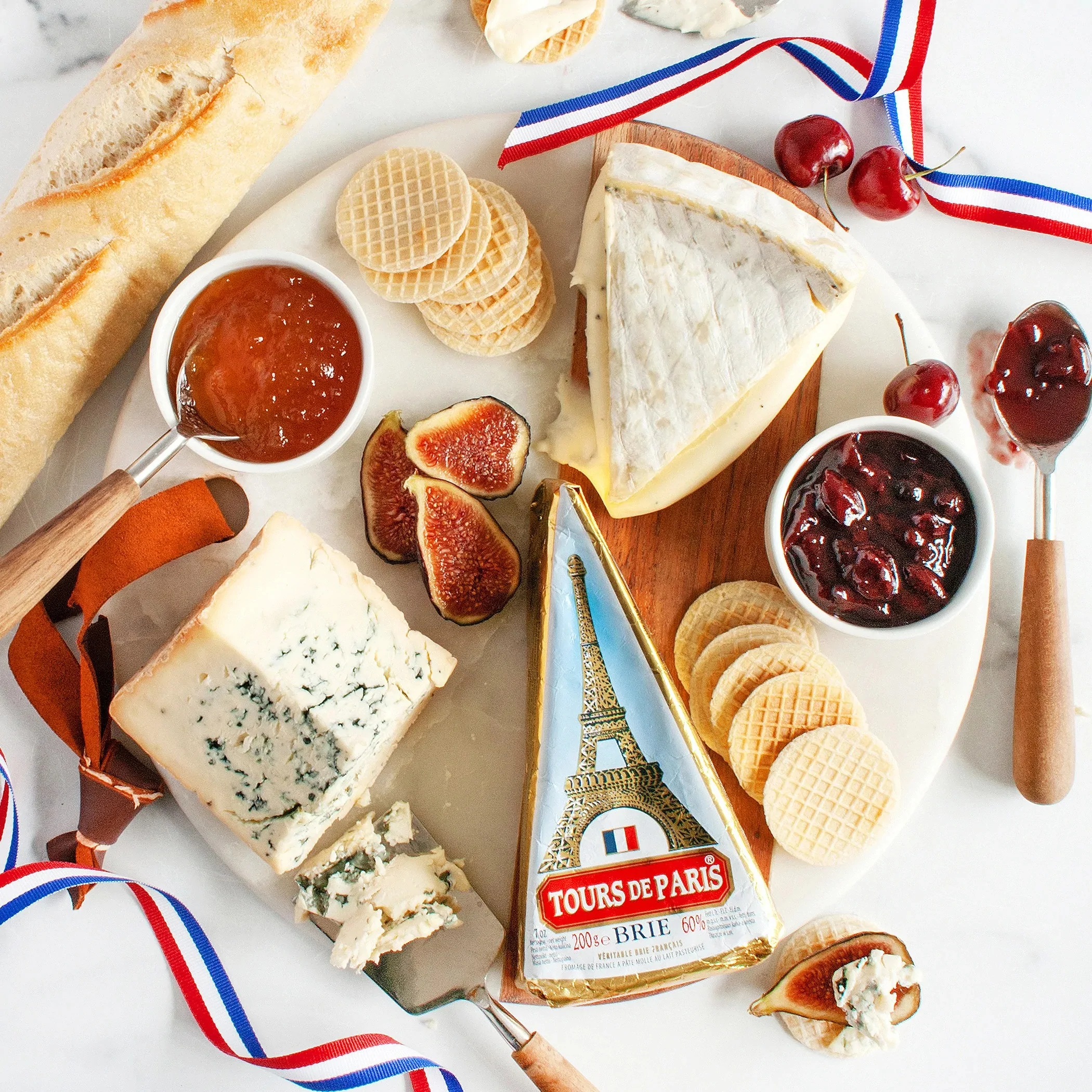
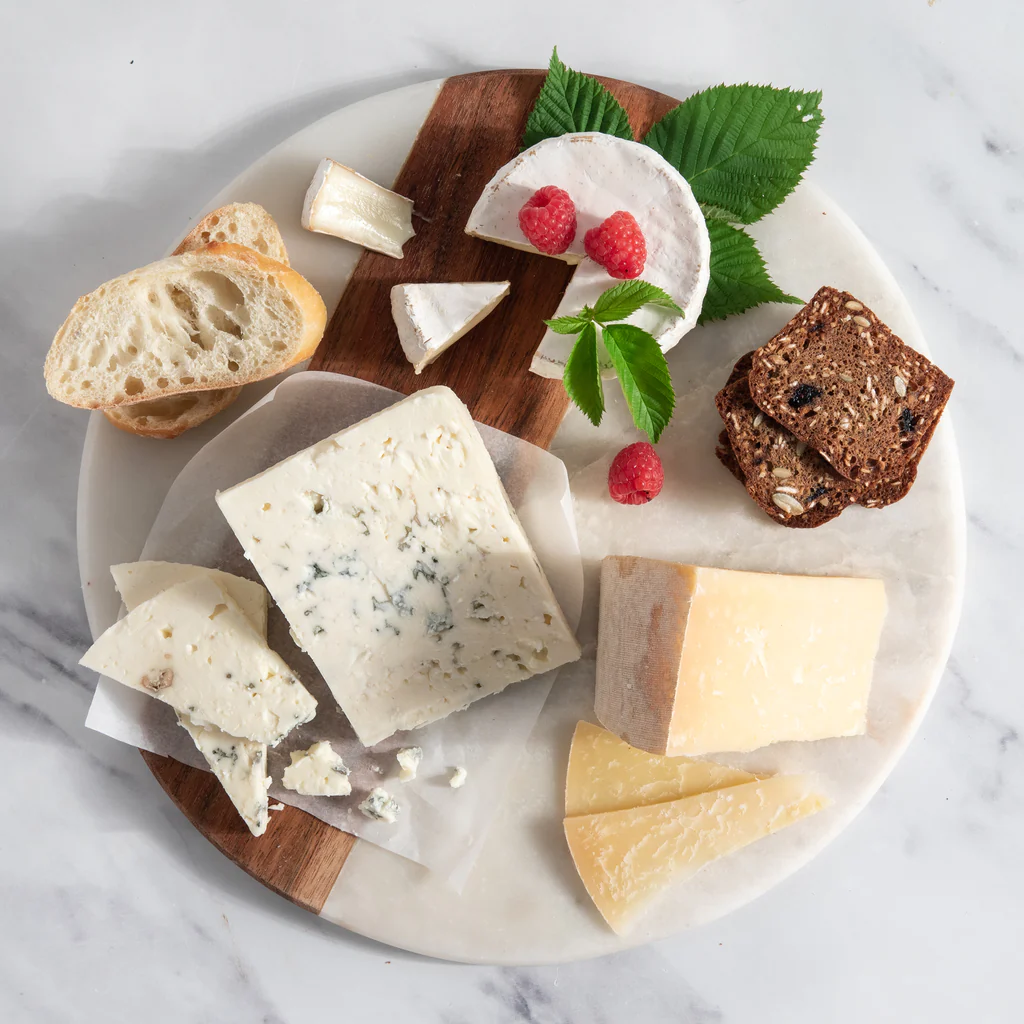
- Brie: Brie is the best known French cheese and is aptly nicknamed "The Queen Of Cheeses". Several hundred years ago, Brie was one of the tributes which the subjects had to pay to the French kings. In France, Brie is very different from the cheese exported to the United States. "Real" French Brie is unstabilized and is at its peak of flavor when the surface turns slightly brown. As long as the cheese is still pure white, the cheese is not mature. Cutting unstabilized Brie before it is ripe will stop the maturing process and the cheese will never develop properly. Exported Brie, however, is stabilized and never matures. Stabilized Brie has a much longer shelf life and is not susceptible to bacteriological infections. Brie, one of the great dessert cheeses, comes as either a 1 or 2 kilogram wheel, and is packaged in a wooden box. In order to fully enjoy the experience, Brie must be served at room temperature. Shop
- Buche de Chevre: Also known as Bucheron, this 4 pound goat log has a bloomy white rind, a creamy ring of soft runny cheese just beneath it, and a chalky, tangy interior. Shop
- Camembert: Another soft-ripened white mold cheese from France, Camembert, like Brie, is soft and creamy with an edible crust. A wheel of Camembert, however, is only 8 ounces and comes in its own wooden box. Shop
- Cantal: Often referred to as French cheddar, Cantal is actually more mild and less acidic than cheddar. Shop
- Chaource: First created in the Champagne region in the 14th century, It is a runny, creamy, mild cheese with hints of mushroom. Shop
- Chevres: These cheeses are made from goat's milk. They come in many sizes and shapes such as round patties, log-shapes, drum-shapes, pyramids, round loaves, long loaves, etc.; their textures vary from soft, but firm like cream cheese, to extremely hard. Chevres are excellent dessert cheeses, often served as snacks, or with before dinner drinks. Goat cheese is often served as an ingredient in many fine dishes. Varieties include Chabichou, Crottin, Clochette, St. Maure, Selles sur Cher and Valencay. Shop
- Comte: Comte is a natural, hard cheese with similar characteristics to Switzerland Gruyere. Shop
- Coulommiers: Similar to Camembert, a wheel of Coulommiers is slightly larger (12 ounces) and the cheese has a nuttier flavor with a thicker crust. Shop
- Doux de Montagne: Shaped like a loaf of artisan bread, this semi-soft, extremely mild cheese is encased in a brown wax rind, making it appear even more bread-like.
- Emmental: Same characteristics as Swiss Emmental. Shop
- Epoisses: A small-form, pungent, washed-rind cheese from Burgundy with a creamy interior that become runny at room temperature. Its rind is rinsed with Marc de Bourgogne during affinage. Shop
- Fleur de Maquis: A Corsican cheese made from sheep's milk and coated with a variety of local herbs. It is firm textured and sweet with strong hints of rosemary.
- Fourme d'Ambert: A cylindrical raw cow's milk blue cheese from Auvergne. It has a creamy texture that is laced with blue eyes (not veins). Shop
- Langres: A small, creamy, washed-rind cheese from Champagne. It has a complex, spicy flavor that incorporates a special saltiness. Pair it with Champagne sparkling wine. Shop
- Livarot: This semi-soft, washed-rind cheese from Normandy has a pronounced flavor with a smooth, slightly spicy flavor and a firm body. Its interior is pale yellow in color and offers an edible crust that is encircled by straps of paper that maintain its shape during affinage. Shop
- Mimolette: A semi-hard cow's milk cheese produced in Flanders and Normandy. It comes in spheres of about 7-8 pounds, it has an orange rind and interior. A firm texture with some small holes and a mild favor. Shop
- Morbier: A semisoft cow's milk cheese from Franche-Comte. It has a creamy brown crust, the interior is two layers of glossy, yellowish-ivory paste separated by a thin flavorless layer of ash. This separates the morning milking from the evening milking. It is a creamy cheese with a flavor of nuts and fruit and an aroma of fresh hay. Shop
- Munster: French Munster is one of the few cheeses which ripen from the inside out. Munster is dark yellow with a strong flavor. It should be served with dark bread and beer. French Munster has nothing in common with Domestic Munster, which is a white, mild cheese. Shop
- Ossau-Iraty: A mellow sheep's milk cheese from the French Pyrenees characterized by herbal notes and a slightly oily texture. Shop
- Pont L'Eveque: This semisoft, soft-ripened cheese from the Normandy region has a pronounced flavor, although its taste is not as strong as its smell. It has a firm body, yellow color and an edible crust. The crust has ridges because it is cured on straw mats. Pont L'Eveque is an excellent dessert cheese that goes very well with a robust wine. Shop
- Pouligny-Saint-Pierre: An unpasturized goat's cheese from Berry, it is soft to hard depending on the age. Also depending on age its color runs from a very white, creamy and fragile to a hard dry interior surrounded by a dark beige crust. All have a piquant flavor and goaty aroma.
- Raclette: Similar to Swiss Raclette. Shop
- Reblochon: From the French Alps, Reblochon is a semisoft, pale yellow, creamy cheese with a nutty flavor. Reblochon is a dessert cheese that goes well with red wine. Shop
- Roquefort: The most famous blue-mold cheese in the world, authentic Roquefort comes from caves near the Spanish border and is made from sheep's milk. Roquefort is sharp, peppery, piquant and distinct. The blue mold is added to the curd by mixing it with powdered bread containing the Pennicillium Roqueforti mold. The French eat Roquefort as a dessert cheese, although most Americans prefer it in salads or dips. Shop
- Saint Marcellin: A soft, rindless cow's milk cheese from Dauphine, it is disk shaped wrapped in chestnut leaves and dipped in wine or eau-de-vie. It typically has a beige crust with blue mold and a soft beige creamy interior. It has an intensely rustic, nutty, fruity flavor.
- Saint Nectaire: A semi-soft cow's milk cheese, disk shaped from Auvergne. It has a smooth reddish rind, ivory to straw colored interior, soft and supple texture. It is an earthy cheese with a fruity flavor and a grassy aroma.
- Saint Paulin: St. Paulin (also known as Port Salut, a licensed name) is a mild and very pleasing dessert or table cheese originally made by Trappist Monks. St. Paulin is creamy and butter-like, yet firm enough for slicing. Genuine Port Salut has an edible, orange rind. However, beware imitations that use a plastic, inedible rind. St. Paulin goes well with fruit and light wine.
- Tomme de Savoie: A semi firm, dish shaped cow's milk cheese from Savoie in the French Alps. It has a distinct thick gray-brown rind with a beige or straw colored paste. It has a slightly salty, mild but savory taste with an aroma reminiscent of a cheese cellar.
- Triple Cremes: These milky, runny cheeses are a must for the dessert course. Varieties include Brillat Savarin, Pierre Robert, St. Andre and Explorateur. Triple cremes are only slightly more evolved than butter, bearing a thin rind and best served at the peak of freshness. Shop
- Vacherin Mont d'Or: A cheese that is soft enough to be spooned, it is made in both the French and Swiss Alps. Vacherin is held together during aging by a band of wood bark that remains on the cheese until you (the consumer) remove it.
German Cheeses
- Bavarian Blue: Sold under brands like Paladin, Bavarian Blue is crumbly and lightly acidic and perfect for adding to salads. Shop
- Butterkase: A mild, creamy cheese perfect for sandwiches. Shop
- Emmental: Same characteristics as Swiss Emmental. Shop
- Harzer Käse : Translated as Hand Cheese, it is made from skimmed sour milk in tiny wheels. This product is sealed in a clear wrapper to display its freshness while keeping its strong odor from permeating your kitchen.
- Limburger: A soft-ripened cheese famous for its pungent odor, Limburger is a strong cheese that goes well with red wine or beer. Limburger has a thin crust, a soft texture, and is nearly white inside. During the two-month curing process, the cheese is constantly brushed with brine until it has absorbed all salt. Shop
- Munster: See French Munster
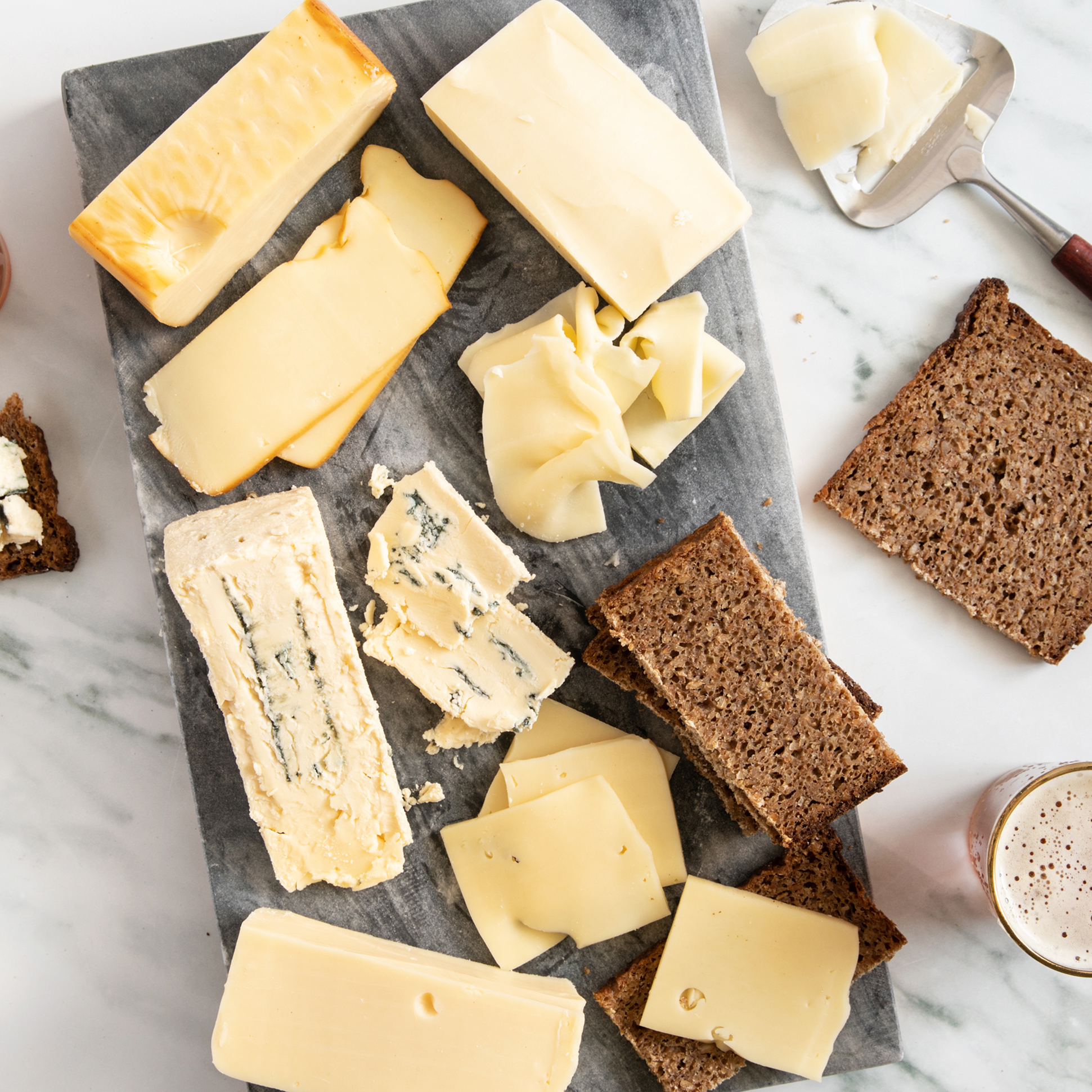
- Rauchkase: Simply German for Smoked Cheese, the most famous brand is Bruder Basil. This cheese is semi-soft with a smoky brown rind. Shop
- Tilsit: A natural semi-soft cheese, German Tilsit has a stronger flavor than its Scandinavian cousins. It has tiny hole formation and a firm texture suitable for slicing. Tilsit is an excellent sandwich cheese, good with robust wine or beer. Shop
Greek Cheeses
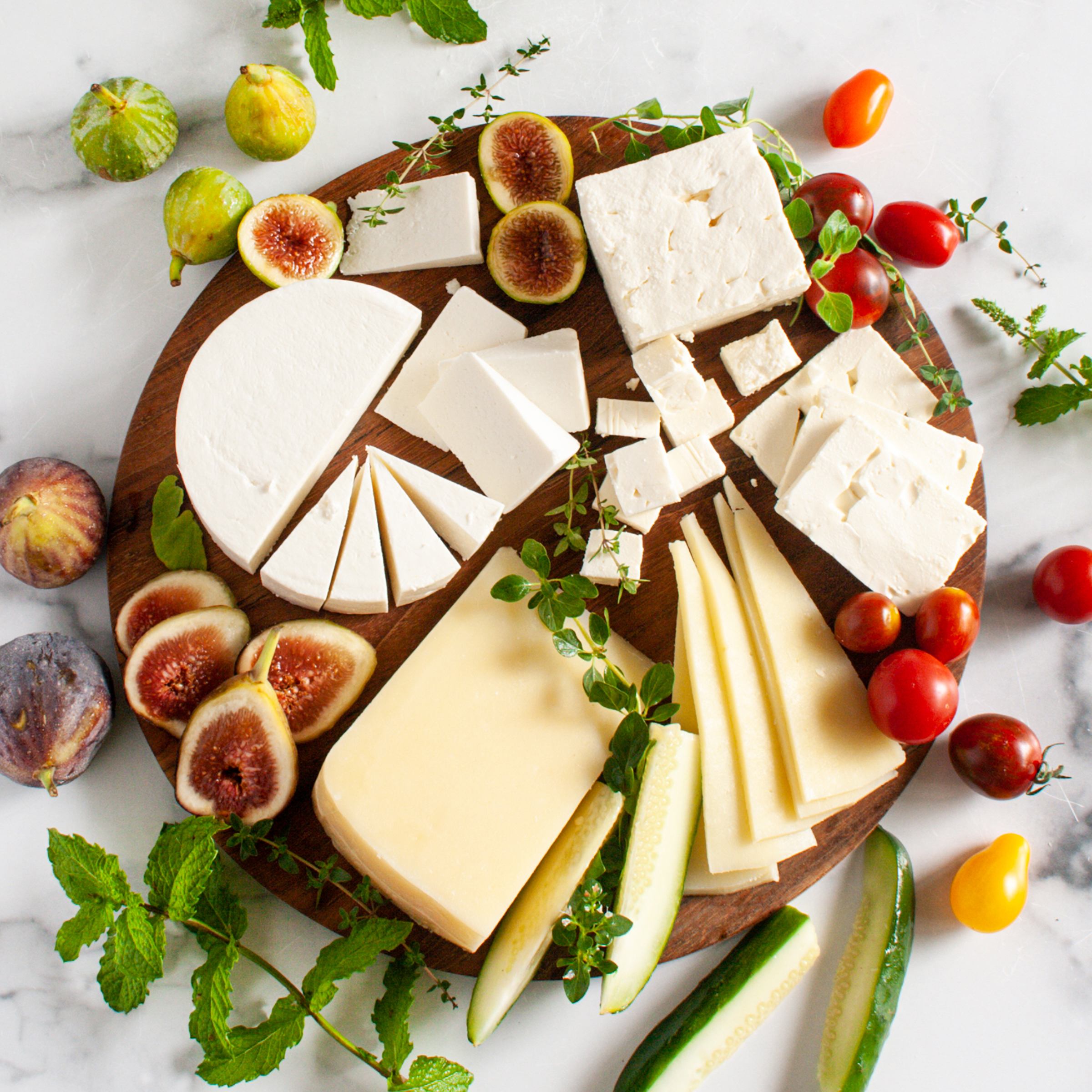
- Feta: Genuine Greek Feta is made from sheep's milk, with a distinct strong, slightly acidic flavor. Feta is crumbly in texture and white in color. Feta is traditionally sold in glass jars, although modern packaging techniques have become more commonplace. Feta needs to be covered in brine at all times otherwise it will dry out and mold fast and needs to be refrigerated at all times. Feta is a true eating cheese, although most Americans think of it as a salad topping. Shop
- Graviera: Made on the island of Crete, this sheep's milk cheese (sometimes blended with goat's milk) is firm and oily in texture, with a sweet flavor offering hints of green olive. Shop
- Kasseri: Pale yellow in color, with a mild buttery flavor and a springy, kneaded texture. Kasseri is a versatile, multi-purpose cheese made from sheep's milk. Shop
- Kefalotyri: This hard, pale, golden yellow cheese has a tange flavor and a sharp aroma reminiscent of Italian Pecorino Romano. Harder and saltier than Kasseri, Kefalotyri is generally served grated over cooked dishes. Shop
-
Mizithra: A cheese made from whey of Feta and Kefalotyri, Mizithra is available both fresh and aged. Fresh Mizithra is soft, similar to cottage cheese. Aged Mizithra is shaped like an ostrich egg, and is firm and pungent, rather like Italian Ricotta Salata. The aged variety makes an excellent grating cheese. Shop
Shop all Greek Cheeses -
Irish Cheeses
- Ardrahan: A washed-rind specialty from the Burns family farm in Duhallow. An aromatic cheese with a creamy, flavorful interior.
- Boilie: Hand rolls balls of fresh cheese - made from either cow's of goat's milk - preserved in sunflower oil. Flavored with fresh herbs.
- Carrigaline: A semi-soft, mild and creamy cheese dotted with small holes.
- Cashel Blue: A soft and creamy blue cheese from Beechmount Farm in Tipperary. Among the most mild and palatable blues, it is best enjoyed at a young age. Shop
- Cheddar: Similar to English Cheddar. Shop
- Coolea: The hills of Collea give their name to the Williams family's acclaimed raw milk gouda-style cheese. Young, mild Coolea is 6-8 weeks old; some is flavored with nettles or herbs and garlic. Long-matured Coolea, piquant with a lingering finish, is becoming more and more sought-after.
- Dunbarra: A soft cheese with an edible white rind, firmer than Brie yet distictively creamy. Hand-made by Dubliner Barra McFeely, this new cheese has already won three first prizes.
- Gubbeen: Gubbeen's gentle flavors reflect the great care taken by Tom and Gina Ferguson in farming their herd of cows and curing the cheese. A fresh tasting, pliant textured cheese with a peach pink washed rind.
- Knockalara: Knockalara is a fresh feta-style cheese made on the Waterford farm by Wolfgang and Agnes Schliebitz. Its light tang marries beatifully with fruity olive oil, so it's ideal in salads. Knockalara comes either plain or preserved in herb-flavored olive oil.
-
Orla: On the Manch estate in Co Cork, Iris Diebrok and Oliver Jungwirth farm an organic flock of dairy sheep. Iris uses the milk for her award-winning semi-hard rind-washed cheese. Orla is matured for 2-6 months.
Shop all Irish Cheeses
Italian Cheeses
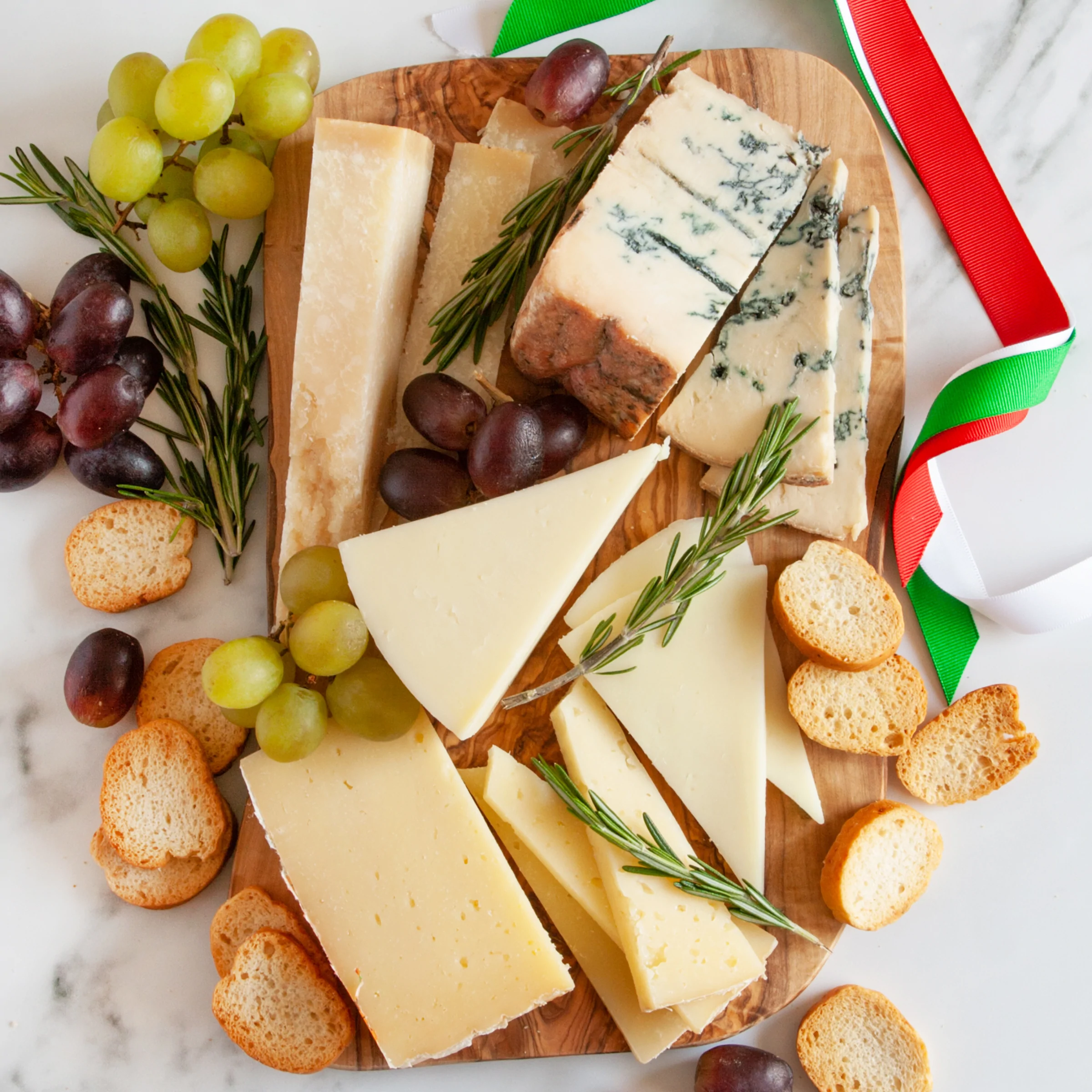
- Asiago: From the high plateau of the same name, Asiago comes in two varieties: d'Allevo is made from whole unpasteurized milk and is firm, sharp and nutty whereas Pressato is made from part-skim pasteurized milk and is soft and mild. Shop
- Baita Friuli: A tasty, firm-textured cheese that is aged for about 5 months. Rich, fruity, and spicy, Baita's flavor is reminiscent of Swiss Gruyere.
- Bitto della Valtellina: A rare cheese that is produced in alpine pastures often inaccessible to mechanized transport. Made from a blend of 90% cow and 10% goat's milk, its flavor and texture are similar to Fontina, yet with a more earthy character. Shop
- Bra: A pale yellow cheese from the Piedmont region that can be hard enough to grate if aged. Often used in baking as well as being a flavorful table cheese.
- Burrata: A modern cheese by Italian standards, it was first created in the 1920s. A fresh cheese, it is essentially a sack of Mozzarella filled with cream and tied at the top. Shop
- Cacio di Fossa: Its name literally means "cheese of the pit." Fossa is a 3-pound odd-shaped Pecorino that is placed in a burlap sack and buried underground during aging.
- Caciocavallo: Similar to Provolone, a drawn-curd cheese typical of southern Italy. Legend has it that originally this cheese was made from mare's milk by nomadic Mongolians. Shop
- Canestrato Pugliese: Owes its name to the baskets in which it is set to ripen. Pure sheep's milk cheese made only from milk taken from Merino or Apulian Gentile breeds that graze naturally.
- Castelmagno: A semi-soft cheese with a chalky to creamy texture made from cow's milk mixed with a touch of goat's milk. Its production, based around Cuneo (Piedmont), dates back to ancient times. Shop
- Fiore Sardo: A pure sheep's milk cheese from Sardinia. Firm textured with a slightly oily texture. Its flavor has hints of green olive, wild herbs and grasses. Shop
- Fontina: Genuine Fontina comes from the Val d'Aosta region of Italy, in the Alps near the French and Swiss borders. One of the few cheeses imported into America that is made from raw (unpasteurized) milk, it is a smooth, straw-colored cheese with a brown rind. Fontina has a delicate, nutty, buttery sweet flavor. Fontina is the primary ingredient in Italian fonduta and is a pristine table or dessert cheese. Shop
- Formai de Mut: Literally translated as "mountain cheese", Formai de Mut is a straw-colored, firm textured cheese made in Alta Val Brembana (the Italian Alps). The cows that produce its milk only graze outdoors on high Alpine pastures.
- Gorgonzola: A blue-veined cheese made of cows milk, Gorgonzola is a soft table cheese. It is an antique cheese of great popular tradition with a compact, rough, hard, reddish crust and a firm but mellow paste interior which melts on the tongue. Its color ranges from white to straw-yellow with an unmistakable marbled green or bluish-green mold. The taste ranges from mild to sharp, depending on age. Gorgonzola is also excellent in salads and dips. Shop
- Grana Padano: A very hard natural cheese, a full wheel of Grana Padano weighs over 75 lbs. Grana Padano has an unmistakably savory flavor that cannot be imitated by lesser wannabees. Often used as a grating cheese, Grana is an excellent topping for steamed vegetables, soups, pasta dishes, veal, chicken, or salads. First created by monks in the 10th century, it is truly one of the world's great cheeses. Shop
- Mascarpone: This cheese is virtually solidified cream, mildly coagulated and whipped into a velvety consistency. It hails from the Lombardy region and is served with fresh fruit or sweetened with sugar and used as a pastry ingredient, such as for Tiramisu. Shop
- Montasio: From Friuli, this mountain cheese has a firm texture and a smooth, nutty flavor with hints of grass and honey.
- Monte Veronese: As its name implies, this cheese comes from the mountains north of Verona. It has a distinctive milky flavor that intensifies greatly with age. Whereas the young varieties are shy and mild, an aged Monte Veronese is brash and bursts with flavor.
- Mozzarella di Bufala: "Buffalo" Mozzarella is made in the South of Italy from pure water buffalo milk. This cheese is pure white, hand-formed into small balls. It is soft and rubbery and stored in a whey brine. It is best served with sliced tomatoes and fresh basil, drizzled with extra virgin olive oil and sprinkled with salt and pepper. Shop
-
Parmigiano Reggiano: Made from the same recipe as Grana Padano, it too is a very hard natural cheese. A full wheel of Parmigiano Reggiano weighs 75 lbs. and must be cut by a saw. Parmigiano Reggiano's flavor is unmistakably piquant and true cheese connoisseurs know when they are served an inferior imitation. Often used as a grating cheese, Parmigiano Reggiano is a great topping for soups, pasta dishes, veal, chicken, or salads. Buy this cheese as a wedge and grate it yourself so you know you are getting the real thing. Shop
Shop all Italian Cheeses
Netherland Cheeses
- Blue de Graven: A modified Gouda recipe that incorporates edible blue veins. Shop
- Edam: Edam is a semisoft to hard natural cheese, depending on age. Edam is similar in flavor to Gouda, but slightly dryer in texture and less creamy. Edam is traditionally shaped into 2 or 4 pound balls coated in red, yellow or black wax. Because of its shape and size, Edam makes an excellent gift basket centerpiece. Shop
- Gouda: Gouda is a semisoft to hard natural cheese, depending on age. It is pale yellow and slightly sweet and nutty. Gouda is considered to be one of the world's great cheeses. It is both a table cheese and a dessert cheese, excellent with fruit and wine. Shop
- Leyden: Leyden is a part-skim cheese laced with caraway or cumin seeds. It is semisoft to hard and bland in flavor. Its seeds give Leyden most of its taste. Shop
- Maasdam: Holland's answer to Jarlsberg, marketed under brand names such as Leerdammer, Westberg, etc. Shop
- Nagelkaas: Similar to Leyden but flavored with cloves. Shop
- Smoked Gouda: Smoked slowly in ancient brick ovens over smoldering hickory chip embers, this sausage shaped cheese is perfect for impromptu picnics, party platters or midnight snacks. Sensational with beer, this hardy cheese has an edible brown rind and a creamy, yellow interior. Shop
- Van Dijk: A category of fresh and aged Dutch goat cheeses, available plain or flavored with unique ingredients like potato skins, basil oil, coriander and marigold petals. Brands include Dorothea, Cornelia and Marygold.
Scandinavian Cheeses
- Blue Castello: A blue-veined cheese with an extremely buttery taste. The surface of the cheese is rindless, thus the entire cheese is edible. Shop
- Cream Havarti: Arguably Denmark's most famous cheese, Cream Havarti is a deliciously mild, very creamy, natural, semisoft cheese laced with small to mid-sized holes. Cream Havarti is both a table cheese and a dessert cheese to be served with fruit and wine. Flavored Cream Havarti cheeses are also available, with ingredients such as dill, jalapeno pepper or garlic and herbs. shop
- Danbo: A mild cheese with a sweet, nutty flavor. Available plain or flavored with caraway seeds.
- Esrom: Previously known as Danish Port Salut, it was first created by monks in the Esrom Abbey. It is a semi-soft cheese with a pungent aroma and a spicy flavor. Shop
- Finlandia Swiss: Similar characteristics to Switzerland Emmental. Aged over 100 days, it is sharp, rindless and delicious.
- Fontina: Danish Fontina is pale yellow and semisoft with a mild, slightly sweet flavor. A derivative of its Italian namesake and a great table cheese that goes well with a light wine, Fontina is also a good sandwich cheese. Shop
- Saga: Original Saga is a cross between blue cheese and brie; a creamy, blue-veined cheese with a white-mold rind. It is very mild for a blue-veined cheese. Saga is an excellent dessert cheese that should be served with fruit and wine. It is also an excellent cheese in salads or as a snack on a cracker. Saga is now made in America as well as in Denmark. Shop
- Samsoe: Named for the island where it originated, Samsoe originally was a Danish copy of Swiss Emmental. Over time, it has developed a unique character of its own. It has a golden yellow color and is usually shrouded in wax. Its texture ranges from springy to firm and has a few scattered the size of cherries. Samsoe's flavor is quite mild with hints of hazelnut, becoming more pungent quality as the cheese matures.
- Juustoleipa: Pronounced hoo-stoh-LEE-pah, its name means "bread cheese" in Finnish. Juustoleipa has been produced for more than 200 years in northern Finland and Sweden, originally from reindeer milk! This cheese is unusual in that it is baked during the cheesemaking process. The heat from baking caramelizes the sugars on the outside of the cheese to form a tasty crust similar to brown bread. Shop
- Lappi: Lappi is a semisoft, semisweet cheese that slices easily and is excellent in recipes and for melting. It comes from Finland's Lapland region.
- Oltermanni: A semi-soft, especially sweet cheese formed in one pound wheels that goes great with fresh fruit and light-bodied wines.
- Turunmaa: Similar to Danish Cream Havarti, Turunmaa is a deliciously mild, very creamy, natural, semisoft cheese laced with small to mid-sized holes. Like Cream Havarti, it is both a table cheese and a breakfast cheese to be served with fruit and bread.
- Graddost: Sweden's most popular cheese, Graddost is deliciously mild and very creamy. It is laced with small to mid-sized holes and makes an excellent dessert cheese to be served with fruit and wine.
- Herrgardost: Sweden's second most popular cheese, Herrgard comes in large wheels and has a few small holes. It has similar characteristics to Gouda and is pale yellow in color. Shop
- Hushallsost: A staple on the Swedish farmer's breakfast table, the name of this semi-soft, mild cheese means "household cheese" in Swedish. It slices and melts well, making it a perfect candidate for sandwiches, gourmet pizzas, and casseroles. Shop
- Prastost: Its name means "Priest Cheese" in Swedish. This cheese received its name in the days when it was customary for Swedish farmers to donate a tenth of everything they produced to the local priest; and only the very best would do. A distinctive cheese with a rich and strong flavor, it is commonly served as a snack or shredded atop stew or soup. Shop
- Vasterbotten: Is the traditional Swedish celebration cheese. To many Swedes, it is considered the "Emperor of cheeses", either because of its heft (it is made in 40 pound wheels) or its full flavor. Produced in Northern Sweden, Vasterbotten is aged for over 11 months and has a dry texture, reminiscent of a young Parmigiano Reggiano or an aged Cheddar. Its flavor is rich and full-bodied with a tangy, bittersweet bite. Shop
- Gjetost: Gjetost (pronounced "Yay-Toast") is a hard cheese made from boiled goat's milk whey either blended with cow's milk or from 100% goat's milk. This cheese has a sweetish caramel-like taste and is dark brown in color. Gjetost is a non-perishable dessert cheese that must be sliced paper-thin and placed on Norwegian flatbread. Norwegian children eat Gjetost in place of candy. Shop
- Jarlsberg: The world's most famous "Baby Swiss", Jarlsberg has the consistency, texture and hole formation of Swiss Emmental, but its flavor is more nut-like and sweeter. A full wheel of Jarlsberg weighs about 20 lbs., one tenth the weight of a wheel of Emmental. Jarlsberg is an excellent all-around performer that can be used as a table cheese, dessert cheese or sandwich cheese. Serve it with wine, beer or aquavit. Shop
- Nokkelost: Similar to Dutch Nagelkaas but often made from whole, rather than part-skimmed, milk. Shop
Spanish & Portuguese Cheeses
- Afuega'l Pitu: This is a very ancient cheese made in Austurias in the valley formed by the rivers Nalon and Narcea. It is a fresh soft cheese made by lactic coagulation and molded or pressed by hand into a conical shape. It is made from pasteurized afternoon milk taken from Friesian, Ratina, Roxa or Carreñas cows. The taste is creamy, tending toward acidic, with a very natural, earthy aroma. It is white if recently made, but yellow, slightly moldy and granular if more cured. No matter the age, it always clings to the palate.
- Amarelo: An unpasteurized sheep's milk cheese from the Beira Baixa region. It is rugged and rustic, and has a touch of the saltiness of the sea. Not a cheese for the faint of heart, Amarelo has a distinctive aroma and a forceful yet buttery flavor.
- Arzua Ulloa: This fresh Galician cheese is Nicknamed "queixo do pais" (cheese from the countryside). It has a smooth, waxy, yellow rind and a creamy, off-white interior. Arzua Ulloa is so soft you can almost spread it at room temperature and has a buttery flavor with hints of yogurt.
- Bica: A raw farmhouse cheese made from a blend of cow, goat, and sheep's milk. Bica has a distinctive yet mild, buttery flavor and a satiny texture. Like most Portuguese cheeses, Bica has a slightly salty flavor because its milk comes from animals that graze on land that sits by the sea. Shop
- Cabrales: A renowned blue cheese from Austurias, Cabrales is made from blended cow's, goat's and sheep's milk. It is matured in naturally-formed limestone caves and has a creamy texture, a complex flavor and a powerful bouquet. Shop
- Evora: This small cheese (each wheel is only 6 ounces) is made from raw sheep's milk which is filtered through a mesh lining after being immersed in a salt brine solution. Aged over 60 days, Evora has a well formed crust and a yellow color that gets darker with contact with air. It has a slightly peppery and piquant flavor that gets stronger as it matures.
- Gamonedo: This cheese is made from a blend of raw cow, goat and sheep's milk, mixed in a fixed proportion. It is left to curdle for a day, then molded and salted. Each wheel is lightly pressed and gently smoked, then matured in natural caves for at least 3 months where it develops some blue cheese characteristics. Its rind is naturally formed, becoming dry with a gray mold. Gamonedo's mild smokiness toward the rind combines with a lively, spicy, buttery interior.
- Garrotxa: A semisoft cheese made from pasteurized goat's milk in Catalonia. It comes in grey-rined felt textured disks, it has a bone white interior. It has a mild flavor - nutty with herbal hints. Shop
- Iberico: A hard, oily cheese made from blended cow's, goat's and sheep's milk. It is mild yet tasty, aromatic and very popular. Good for cooking and for eating, it goes well with Spanish red wines. Shop
- Ibores: This cheese is made in Extremadura, the most rugged, least developed, and most economically distressed region in Spain. This raw goat's milk cheese reflects its homeland with its full yet simple flavor. It has a hard, dense texture and its flavor becomes sharper with age. During its two-month aging period, this rustic cheese is rubbed with a mixture of olive oil and sweet paprika. Shop
- Idiazabal: This handmade, unpasteurized sheep's milk cheese comes from the Spanish Pyrenees. Idiazabal is naturally smoked with a hard orange-brown rind. In the old days, Basque shepherds lived in small mountain huts and had no space to store and age their cheeses other than inside their stone chimneys. As it turned out, people enjoyed the smoky flavor that the cheese acquired from aging inside the chimneys, and Idiazabal's popularity spread throughout Spain. Shop
- Mahon: An aged cheese produced from cow's milk on Minorca, the outermost of the three Spanish Balearic Islands. Ripened for six months to two years the eight inch squares weighing 5 to 6 pounds, it is buttery sharp, slightly salty with a sweet and nutty aroma.
- Majorero: A large cheese with a beautifully decorated rind, Majorero is made from unpasteurized goat's milk, and can be sold fresh or cured. It has a lively acidity and a slight piquancy on the palate. It is creamy with a mouth-watering, long-lasting flavor. Shop
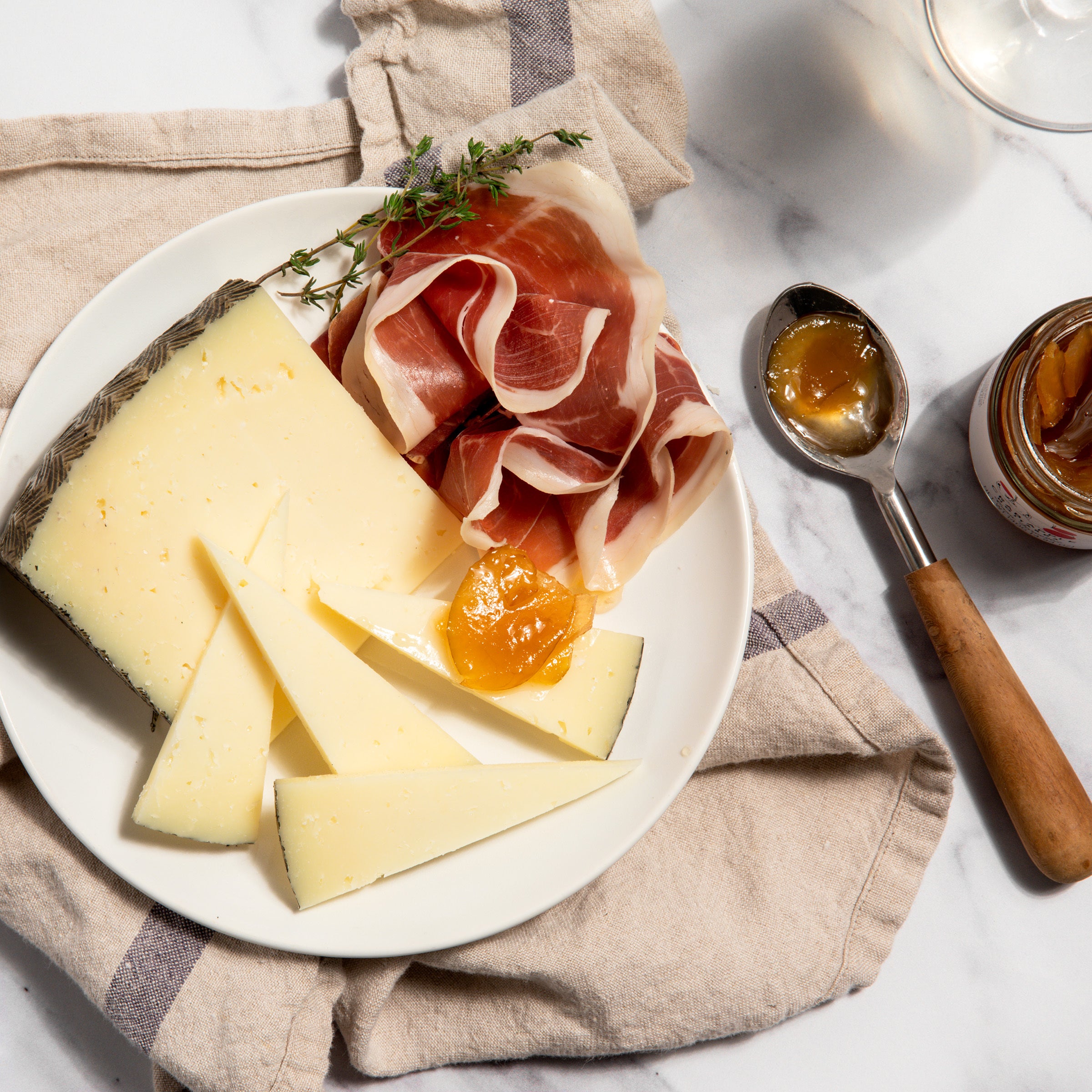
- Manchego: This historic cheese is produced in the La Mancha region from pasteurized sheep's milk,. It has a black, gray or buff colored rind with a crosshatch pattern, the interior ranges from stark white to yellowish, depending on age. It has an even distribution of holes and a mild, slightly briny, nutty flavor. Shop
- Murcia: A Spanish Queso de Cabra, this cheese is produced in the region of the same name. This region's rich variety of grasses, shrubs and abundant wild herbs give Murcia cheese a taste and aroma that could only come from the Spanish heartland. Its distinctive lemony-peppery flavor and supple satiny body have earned Murcia a place among Spain's elite cheeses. When cured al Vino, the cheese may be called Drunken Goat in America. Shop
- Picon: A piquant blue cheese from Cantabria made from a blend of cow, goat and sheep's milk.
- Roncal: A hard cheese from Navarre produced from sheep's milk and aged for a minimum of three months. It has a hard beige to gray rind with beige interior which turns to amber with age. It has a rich, olivey, nutty flavor. Shop
- San Simon: Like Tetilla, San Simon is shaped like a breast, but more elongated like a dunce cap. From Galicia, San Simon is aged 2 to 4 weeks, lightly pressed and then gently smoked for 2 weeks after leaving the mold. Inside its red, polished brown rind, San Simon has a creamy, buttery, smoky flavor that ranges from mild to piquant. Shop
- Tetilla: A semisoft cheese produced from cow's milk in the Galicia region, it comes in squat cone shaped like a woman's breast (hence the name) about five inches in diameter. It has a greenish beige rind and a white interior. It has a mild and tangy flavor. Shop
- Torta del Casar: This unpasteurized sheep's milk cheese has a fine, soft delicate rind with a yellowish color. The interior is creamy and spreadable, almost spoonable. With a special aroma and strong mature taste, Torta del Casar is also slightly salty and a tad bitter due to the use of "cuajo" for coagulation. Served by spoon at room temperature with the top of the wheel sliced off.
- Tronchon: A semisoft cheese made from blended cow's, goat's and sheep's milk. It comes in rindless wheels with a dimple on top, a by-product of the manufacturing process. The interior is bone white and has many small holes.
- Valdeon: This blue cheese is often sold as Cabrales in the United States because of its similarly bold bold blue. It is made in the Castille-Leon region, where each wheel is wrapped in chestnut leaves before being sent to market. Shop
- Zamorano: Made in Castille-Leon, where it is matured for 6 months in a high humidity environment to encourage the formation of a natural rind. Subtle hints of caramel and grass burst through the buttery nature of the cheese, making it ideal to serve with ham, fruit and some crusty bread. Shop
- Nisa: A raw ewe's milk cheese made from the milk of Merino sheep. Its milk is curdled after coagulation provoked by the addition of thistle. Salting is done directly on the paste after it is formed into its disc shape. Nisa has a soft paste with small eyes and a yellowish color. The flavor is robust, earthy, and a slightly acidulous in taste. Shop
- Sao Jorge: This large unpasteurized cow's milk cheese comes from the volcanic island of the same name in Portugal's Azores archipelago. It has a cheddar-like flavor with hints of black pepper. Shop
- Serpa: A raw sheep's milk cheese from the Alentejo region, Serpa is considered to be the most famous traditional cheese from this region. Made only from milk taken from Merino sheep, this cheese has a straw-yellow colored rind covering a buttery interior with few holes.
Shop all Spanish & Portuguese Cheeses
Switzerland Cheeses
- Appenzeller: A natural, hard cheese that is similar to Emmental, although with smaller and fewer holes. It is cured in white wine and spices that give it a unique piquant flavor. Shop
- Bundnerkase: This extraordinary washed rind specialty cheese comes from Graubuenden, well known for its tourism. This cheese is aged for a minimum of 8 months and is made daily from farm fresh cow's milk at small alpine dairies.
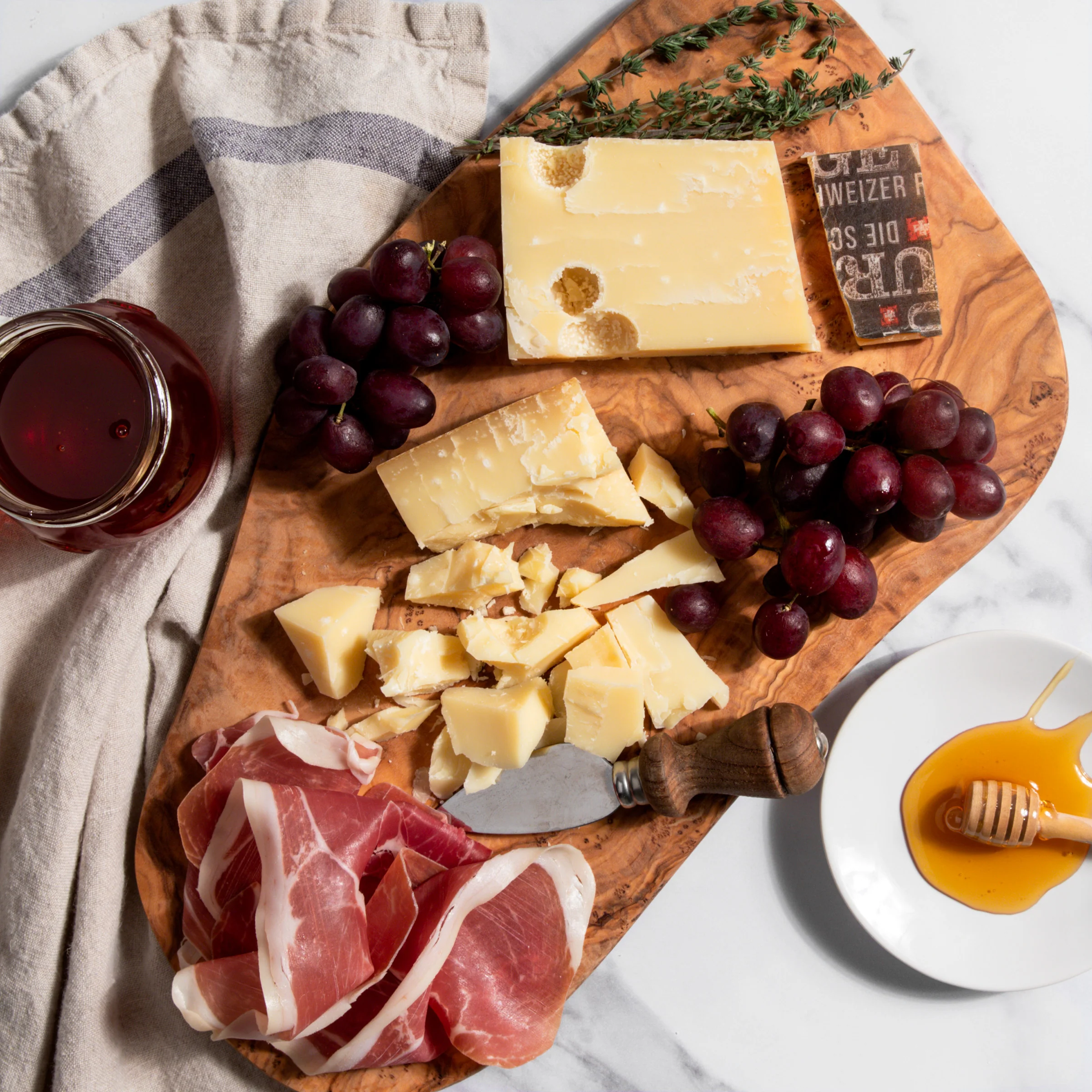
- Emmental: More commonly referred to as "Swiss Cheese", Emmental is imitated by many cheese producing countries. Emmental is considered to be one of the most difficult cheeses to successfully manufacture because of its complicated, hole-forming fermentation process. Emmental can be used as a table cheese, dessert cheese or sandwich cheese. Shop
- Gruyere: Famous for its use in Swiss Fondue, Gruyere is a hard cheese that is similar to Emmental but with smaller hole formation. Its texture is chewy and it develops small cracks as it ages. In addition to its role as a Fondue cheese, Gruyere is also an excellent sandwich cheese that melts evenly. Shop
- Hoch Ybrig: Made in the tradition of Gruyere, but washed with white wine. A hearty unpasteurized cow's milk cheese with a hint of sweetness at the end.
- Le Marechal: A raw cow's milk cheese produced in small batches in the town of Corcelles-aux-Payernes. Aged for 5 months, at the beginning of the third month the cheese is rubbed with Herbes de Provence (a blend of thyme, oregano and other country herbs) giving it a beautiful appearance and a wickedly spicy flavor. The herb flavor penetrates the rind, imparting a rustic flavor on the cheese.
- Raclette: A hard cheese with a subtle flavor, good aftertaste and firm texture. Raclette is pale yellow inside an inedible crust. Raclette is famous for a Swiss dish made by melting thin slices over broiled potatoes. Shop
- Sap Sago: A tiny, green, 2 ounce cheese wrapped in foil, Sap Sago is a very hard grating cheese with a sharp flavor and a pungent aroma due to the use of a powder made from clover leaves added to the cheese during manufacture. Sap Sago is not an eating cheese, but is good as a food topping and in cooking.
- Sbrinz: This hard, grainy cheese is one of the world's oldest, dating back to 23 A.D. Made high in the Alps in Switzerland's central region, Sbrinz is often compared to Parmigiano Reggiano. Like Reggiano, Sbrinz comes in massive 80 pound wheels and is made from unpasteurized cow's milk. Aged for at least 18 months, this cheese is hard enough to grate. The Swiss enjoy it shaved in paper-thin slices and served as an appetizer with air-dried beef and tomatoes.
- Tete de Moine: The literal translation of the French words "Tete de Moine" is "Monk's Head". Although this fine Swiss product was first created by monks, it is now produced by the lay community. Tete de Moine, made in the Swiss Alps near the town of Bellelay from rich unpasteurized cows' milk, is a sharp cheese with a full, nutty flavor. Its intense flavor is even more pronounced when served using a Girolle - a special type of knife that creates thinly shaved cones of the cheese. Shop
- Tilsiter: Natural, simple and highly appreciated, Tilsiter cheese has been synonymous with genuine Swiss flavor since the early 1900s. Enjoy it melted or chunked, served with a glass of Viognier. Shop
- Vacherin Fribourgeois: In the warm season, the pastures in the heart of the Fribourg Pre-Alps come to life with an almost endless variety of delicately scented flora. Vacherin Fribourgeois is made in these hills. It has a firm texture and an ivory to yellow colored interior. Its flavor is fruity and aromatic with a slight but enjoyable bitterness. Shop
- Vignerons: Like most Swiss cheeses, Vignerons is a "mountain cheese". This is a term that refers to a large cheese that is made in the mountains from high-pasture milk. These cheeses are usually firm, long-aged, and made from raw cow's milk. High Alpine pastures produce a thicker, more flavorful array of plants than do fields at lower altitudes. The cattle that graze on these pastures produce milk that is higher in butterfat than average cow's milk and, therefore, commands a high price and is prized for cheese making. Vignerons, commonly known as "winemaker's cheese", is made using this milk and has a firm, satiny body with a scattering of small holes. The flavor is similar to but slightly stronger than a premium Gruyere, with a distinct nutty sweetness.
- Wild Spitz: an artisanal farmstead cheese from the foothills of the Swiss Alps. This hard cheese is made from a combination of organic cow's milk (95%) and organic goat's milk (5%). Not only is the milk organic, but it is sourced from grass-fed animals living naturally on lush mountain pastures. This cheese has a complex, nuanced flavor that slowly develops under repeated washings with a salt water brine. It has a rich creaminess, herbal notes, and a mouth-watering tanginess. The sharpness on the finish comes not only from the goat's milk but also the extended aging process. Shop
USA Cheeses
- Berkshire Blue: This cheese was born in 1999, borrowing a recipe from the blue made by the Willett Farm Dairy of Somerset, England. Berkshire Blue is made from whole unpasteurized Jersey cow's milk. Its production is done completely by hand, and by only one person. It is hand-stirred, hand-ladled and manually turned, resulting in an exceptionally creamy, smooth blue.
- Blythedale Vermont Camembert: For over 100 years, the barn at Blythedale Farm has been a focal point of the village of Cookeville, Vermont. A much newer barn houses the 30 or so Jersey cows in Becky and Tom Loftus' herd. These cows supply all of the milk for Blythedale Farm's Vermont Camembert. Blythedale's Vermont Camembert is much different than today's stabilized French Camembert in that it ages gracefully. When fresh, it is mild and creamy, pale yellow in color with a bloomy white mold rind. When aged it develops lots more character, turning yelow-orange and losing most of its fluffy white coating. The texture turns from creamy to almost crumbly and the flavor explodes with a complex earthiness.
- Brick: Brick is the oldest cheese type to have originated in the USA, first created in 1875 by John Jossi, a native of Switzerland living in Lebanon, Wisconsin. Myron Olson has been crafting cheese for over 30 years and is the manager of Chalet Cheese Cooperative Brick where he makes this Wisconsin original. Flavor changes from mild and sweet, with a touch of nuttiness when young to pungent and tangy when aged. Brick is surface-ripened with a smooth, open texture.
- Capri: Westfield Farm has been handcrafting award-winning farmstead cheeses in Hubbardston, Massachusetts since 1971. Located on 20 acres in the central part of the state, the farm turns out a little over 900 pounds of cheese per week. Their Capri cheeses are fresh cheeses made from cow or goat's milk, and may be white or blue. The white varieties are flavored with additives like cocoa or wasabi. Shop
- Cheddar: Shop
- Colby: A bland cheese with a mild and mellow flavor that is lightly sweet with a slightly tangy aftertaste. Often shredded or melted and used in recipes. Shop
- Humboldt Fog: With a central layer and outer covering of ash, this goat's milk tome ripens with a soft, white interior. When cut, it is reminiscent of the early morning fog. Humboldt Fog is made by Cypress Grove Chevre, which is owned and operated by mother and daughter team, Mary Keehn and Malorie McCurdy, in Humboldt County, California, among the towering redwood trees. It has a firm, chewy, edible rind that conceals a soft interior that becomes runny at room temperature. Shop
- Maytag Blue: First created in the 1930s, this full-flavored, moist yet crumbly blue cheese has a lemony finish. Made in Iowa at the Maytag Dairy from local milk. Shop
- Monterey Jack: David Jacks, a Scottish immigrant who settled in Monterey, California created Monterey Jack in the 1890s. Jacks followed a Swiss-method of cheesemaking, which is why Monterey Jack has its semi-soft, cracked texture. When young, it is bland and mostly flavorless - therefore often blended with additives like jalapeños or herbs. When aged for 1 year, it develops a rich, savory, tangy flavor and a texture that is hard enough to grate.
- Moses Sleeper Cheese: The Cheese House at Jasper Hill Farm in Vermont experimented for several years in order to create this truly exceptional cheese. Seeking to create a rival to authentic Camembert de Normandie, cheesemaker Mateo Kehler eventually developed this recipe. Moses Sleeper was a Revolutionary War era scout who gave his life on Vermont's legendary Bayley Hazen Military Road. As far as the cheese goes, it starts with a expertly developed bloomy rind that enrobes a gooey, milky core. Its flavors explode in your mouth: cauliflower, mushroom, creme fraiche, and toasted nuts. The finish is bright and acidic, presenting a perfect foil for the vegetal and savory notes that precede and making it perfect for the after dinner cheese plate. Shop
- Point Reyes Original Blue: Made from grade A unpasteurized milk taken from a closed herd of Holstein cows that graze on the green pastured hills overlooking Tomales Bay, California. There, the coastal fog and salty Pacific breezes conspire in lending the cheese a unique character. This blue is made within hours of milking, and then ages for a minimum of six months. It is a creamy, full-flavored blue cheese with definite hints of lemongrass and sea salt. Shop
- Teleme: Teleme is a California original that is now made in Maine. This soft, creamy white cheese has a slightly tangy, even lemony flavor and a pronounced runny quality that develops as it ages.